Microneedling with the DP4 Medical Pen: What It Does and What to Expect
Texture, pores, acne marks or dullness? A clear guide to how microneedling with the DP4 medical pen works and what to expect, session by session.
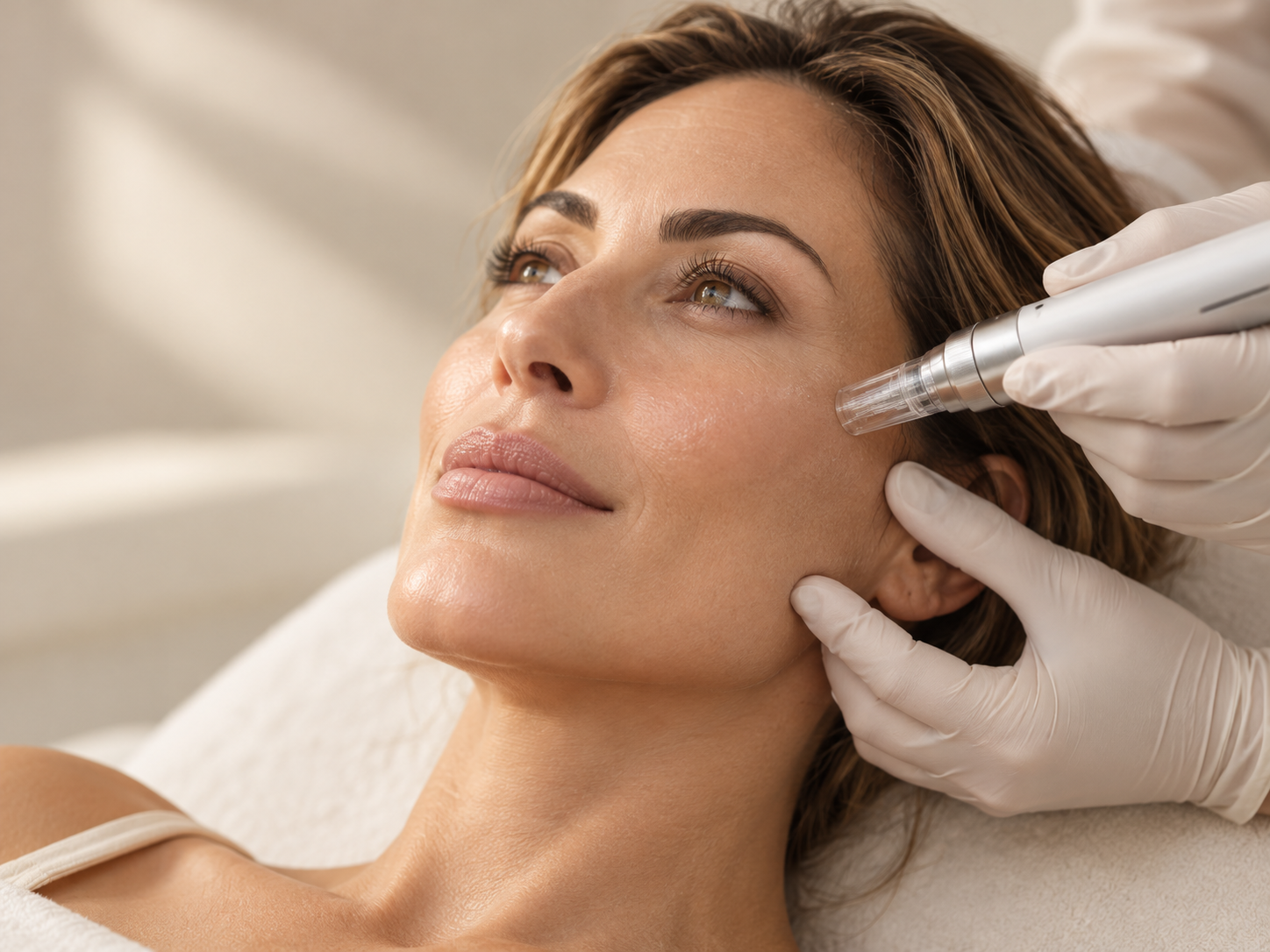
If your skin concerns are about quality rather than volume, such as uneven texture, enlarged pores, acne marks, dullness or fine lines, microneedling is often the first treatment we recommend. At SKN MD, it is performed with the DP4, a medical microneedling pen that lets your nurse injector adjust needle depth precisely for each area of the face. Understanding how it works, and what it can and cannot do, is the first step toward a plan that suits your skin.
How microneedling works
Microneedling uses very fine needles to create thousands of tiny channels in the skin. These controlled micro injuries are not harmful. They signal the skin to begin its natural repair process, which gradually increases the production of collagen and elastin, the proteins that keep skin firm and smooth. Over a series of sessions, many people notice refined texture, softer fine lines, smaller looking pores, and a brighter, more even surface.
Why we use the DP4 medical pen
Not all microneedling is the same. The DP4 is a medical device designed for clinical use, and it allows the needle depth to be adjusted throughout the treatment. Thinner skin around the eyes can be treated more gently, while areas such as the cheeks, where acne marks and enlarged pores tend to sit, can be treated a little deeper. Each treatment uses a sterile needle cartridge reserved for a single patient. The result is a treatment that is precise, consistent and tailored to your skin rather than applied the same way everywhere.
Who microneedling suits
Microneedling is our go to treatment for enlarged pores and acne marks, and an excellent choice for anyone who wants smoother texture, a more even tone and a healthier glow. It suits most skin types. Your nurse injector will review your history and examine your skin first, because some situations, such as active breakouts, certain skin conditions or recent sun exposure, may mean waiting or choosing another approach.
It is also important to be clear about what microneedling does not do. It works on skin quality, not on lifting or significant firming. If your main concern is laxity or a softer jawline, we may suggest XERF, a radiofrequency skin tightening treatment offered at our Montréal clinic, either instead of microneedling or as a complement to it. This fits our philosophy at SKN MD: we don’t fill, we correct, and we build a plan around what your skin actually needs.
Enhancing your results
The tiny channels created during microneedling are an opportunity to support the skin’s repair. Depending on your goals, your treatment can be paired with PRP prepared from your own blood or with a regenerative booster selected at your assessment. Every microneedling session at SKN MD also includes a complimentary PDRN repair mask to calm the skin and support recovery.
What to expect: comfort, downtime and results
A topical numbing cream is applied before treatment, and most people find microneedling very tolerable. Afterward, it is common to see redness and a warm, slightly sensitive feeling for a day or two, similar to a mild sunburn. Because microneedling works by stimulating your own collagen, results build gradually rather than appearing overnight. Many people notice a fresher look within the first weeks, with continued refinement over the following months as new collagen matures. A series of about three sessions spaced several weeks apart is typical, and your nurse injector will recommend a plan suited to you. Gentle aftercare, daily sun protection and a simple skincare routine help you get the most from each session.
Our medically directed approach
At SKN MD, microneedling is performed by experienced nurse injectors under medical direction. Treatments are never one size fits all. We start with a proper assessment, discuss your history and goals, and recommend the approach, or combination, most likely to give you a natural, lasting improvement in skin quality.
To learn more, visit our microneedling page and our XERF skin tightening page, see current ranges on our pricing page, or find us at our Montréal and Ottawa clinics.
Frequently asked questions
How many microneedling sessions will I need?
Most people benefit from a series of about three sessions spaced several weeks apart, because microneedling builds collagen gradually. Your nurse injector will recommend a number based on your concerns and how your skin responds.
Is there downtime after microneedling?
Downtime is usually short. Redness and mild sensitivity for a day or two are common. Most people return to their routine quickly with proper aftercare and sun protection.
Does microneedling hurt?
Comfort is a priority. A topical numbing cream is applied beforehand, and most people describe the treatment as very tolerable. Your nurse injector will discuss what to expect at your assessment.
Does microneedling help with acne scars and enlarged pores?
Yes. Microneedling is our go to treatment for acne marks and enlarged pores. It stimulates new collagen, which gradually smooths texture and refines the look of pores over a series of sessions. Active breakouts need to settle first.
Can microneedling tighten sagging skin?
Microneedling improves skin quality but is not a lifting treatment. For laxity or a softer jawline, your nurse injector may recommend XERF radiofrequency skin tightening at our Montréal clinic, alone or combined with microneedling.
Book your consultation: Ready to start? Book a consultation today or call us at (514) 706 3756.
This article is for general information only and is not medical advice. Results vary from person to person. A consultation with a qualified professional is needed to determine whether a treatment is appropriate for you.