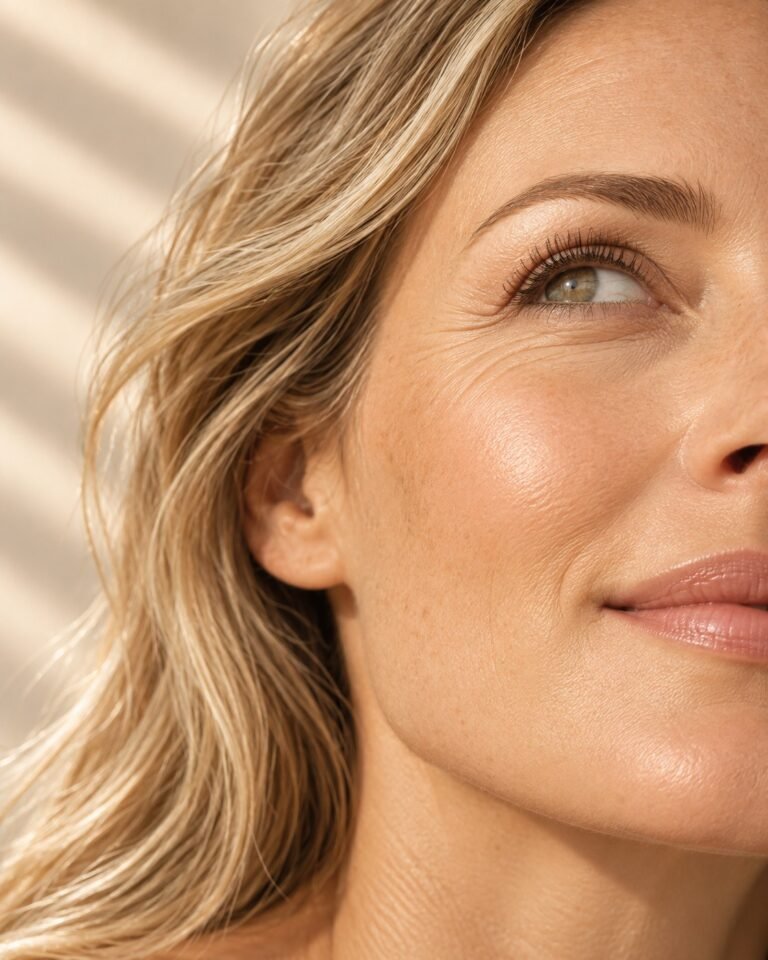
Under Eye and Tear Trough: Your Treatment Options
Shadows, hollows or crepey skin? A clear guide to what causes a tired looking eye area and the treatments that can restore a rested, natural look.

The eyes are often the first place we notice the signs of time. Many people tell us they look tired even after a full night of sleep, with shadowing, puffiness or fine lines settling into the delicate skin of the eye area. The good news is that this region responds well to a careful, measured approach. At SKN MD our focus is never on simply adding volume. We assess the whole face, understand why the area looks the way it does, and build a plan that restores a rested, natural appearance.
Why the under eye area shows age early
The skin beneath the eyes is among the thinnest on the body, and it rests on very little underlying fat. As the surrounding support structures change over time, small hollows can form where the cheek meets the lower eyelid. This creates the shadow many people recognise as a tear trough. Because the skin is so fine, it also reveals surface changes such as crepiness and loss of glow sooner than other parts of the face.
What causes tear trough hollows and dark circles
Several factors can act at once. Genetics play a large role in how deep the tear trough sits and how visible the blood vessels beneath the skin appear. Natural changes in facial volume and skin quality add to the effect, as does fluid retention that can cause morning puffiness. Pigmentation and thin skin can make the area look darker. Because the causes differ from one person to the next, no single treatment suits everyone. This is exactly why a proper assessment matters.
Treatment options for the eye area
Dermal fillers for the tear trough
When the main issue is a genuine hollow, a small amount of hyaluronic acid filler placed with precision can soften the shadow and restore a smoother transition between the lower eyelid and the cheek. The tear trough is a technically demanding area, so conservative placement and the right product matter a great deal. Often the most natural result comes from supporting the cheek structure first rather than treating the hollow in isolation. Learn more on our Dermal Fillers page.
Treatments that improve skin quality
Not every tired looking eye needs filler. When the concern is fine lines, thin skin or a dull surface, treatments that rebuild skin quality are often a better fit. Skin boosters deliver deep hydration and encourage firmer, more resilient skin. PRP and PRF use the regenerative components of your own blood to support collagen in this delicate zone. Microneedling can improve texture and tone over a series of sessions. See our Skin Boosters and PRP/PRF pages.
Skin tightening for crepey skin
When loose or crepey texture is the main concern, energy based skin tightening can firm the area gradually by stimulating the skin’s own collagen. This approach suits patients who want a subtle, natural improvement without adding volume.
Why the assessment matters more than the injection
At SKN MD we follow the MD Codes method, a structured way of reading the face that looks at balance and proportion rather than chasing a single line or shadow. Our approach is medically directed and built on a simple idea: we don’t fill, we correct. For the eye area this is especially important, because treating a hollow without understanding the surrounding support often creates a puffy or heavy look. A thoughtful plan may combine more than one treatment, sequenced over time, to achieve a result that looks like you on a well rested day.
Results, recovery and what to expect
Most skin quality treatments involve little downtime, though mild redness or swelling is normal for a short period. Filler results in the tear trough can be visible quickly, with final settling over a couple of weeks. Because every plan is different, your treatment timeline, the number of sessions and the expected longevity are discussed during your consultation. For general guidance on investment, please see our Tarifs page, and note that pricing depends on the plan designed for you.
Frequently asked questions
Is tear trough filler painful?
Most people find the treatment very tolerable. A topical numbing cream is typically applied, and many filler products contain a local anaesthetic to improve comfort.
How long do under eye results last?
This varies by treatment and by individual. Hyaluronic acid filler in this area can last many months, while skin quality treatments are usually maintained with periodic sessions. Your specific expectations are reviewed during your assessment.
How do I know if I am a good candidate for tear trough filler?
Not everyone is. Some people benefit more from skin quality treatments or from addressing the cheek first. A consultation is the only way to know what suits your anatomy and your goals.
Is there any downtime?
Downtime is usually minimal. Some bruising or swelling can occur, particularly with injectable treatments in this delicate area, and this typically settles within a few days.
Book your assessment
Ready to understand what your eye area really needs? Book a personalised assessment at our Montréal or Ottawa clinic today: book now.
This article is for general information only and does not constitute medical advice. Individual results vary, and all treatments carry potential risks. A personalised consultation is required to determine whether any treatment is appropriate for you.