Clinical skin treatments and medical facials
How it works?
Clinical skin treatments bring together several medical, corrective methods — prescribed and sequenced by our medical team — to address concerns such as acne, hyperpigmentation, signs of ageing and overall skin health. They are not sold à la carte: each protocol is chosen for your specific indication and followed over time.
At SKN MD, every skin protocol begins with a diagnosis and a clear plan. We examine your skin, take clinical photographs, and calibrate the actives and sessions to your skin type and goals. A follow-up at four weeks is part of the process, not an add-on.
Because skin renewal takes time, clinical skin treatments are typically delivered as a course over three to six months, with photoprotection and a consistent home routine as part of the plan. Individual results vary.
Our clinical skin treatments complement skin boosters, microneedling and biostimulators. Every treatment begins with a medical consultation.
Next steps

1. Consultation
During your consultation at SKN MD, one of our medical professionals will examine your skin, take clinical photographs, review your history and routine, discuss your goals, and design a personalized skin protocol — including the actives, the number of sessions and the sequence.
2. Treatment
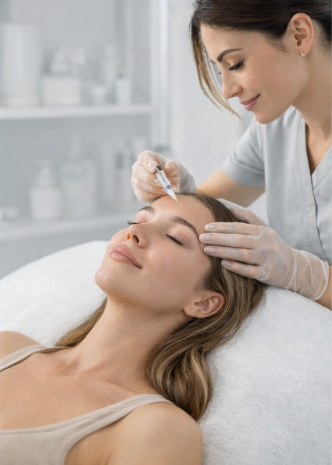
On treatment day, the skin is medically cleansed and prepared, then the prescribed corrective actives or procedure are applied according to your protocol. Duration varies by treatment. You leave with sunscreen, repair care and written instructions.

3. Results and follow-up
Skin improves gradually as the protocol takes effect, with a follow-up at about four weeks to review progress and adjust the plan. Photoprotection is essential to protect and sustain results. Individual results vary.
Clinical skin treatments - Overview
Postponed for active skin infection (such as a herpes flare), an acute acne flare or irritated eczema; some actives are avoided in pregnancy. A consultation confirms eligibility.
Depending on the protocol, mild redness, tightness or light flaking may occur for a short period and settle quickly.
Many protocols run over four to six sessions; a skin-health maintenance course may be two sessions a year. Set at consultation.
Most sessions take about 30–60 minutes depending on the protocol.
Results are maintained through continuity of care and a consistent home routine, with seasonal maintenance recommended. Individual results vary.
Pricing depends on the protocol and number of sessions. Exact pricing is confirmed at consultation.
Most treatments allow a return to activities the same day; more intensive corrective care may cause mild redness for 24–48 hours.
Acne and acne scarring, hyperpigmentation (melasma, lentigines), signs of ageing, dehydration, uneven texture and overall skin health.
Patients ask us…
Clinical skin treatments are postponed in cases of active skin infection, an acute acne flare or irritated eczema, and certain actives are avoided during pregnancy. Your skin and history are assessed at consultation to confirm suitability.
Clinical skin protocols can be adapted for all skin types, from phototype I to VI, with strict adjustment of actives and photoprotection. A medical assessment determines the right protocol for your skin.
Depending on the protocol, you may notice mild redness, tightness or light flaking for a short time. Any expected effects are explained before each session.
It depends on the indication — protocols for acne or pigmentation often run over four to six sessions, while a maintenance course may be two sessions a year. The plan is set at consultation.
Skin improves gradually across the course, with texture and clarity building over weeks to months. Photoprotection and home care are essential to results. Individual results vary.
Yes, with adapted actives and strict photoprotection. Protocols are calibrated for deeper phototypes to reduce the risk of post-inflammatory hyperpigmentation.
Yes, without exception. A daily SPF 30+ is essential to preserve results and prevent post-treatment pigmentation.
Yes, in sequence and planned at consultation — they are generally not all performed on the same day.